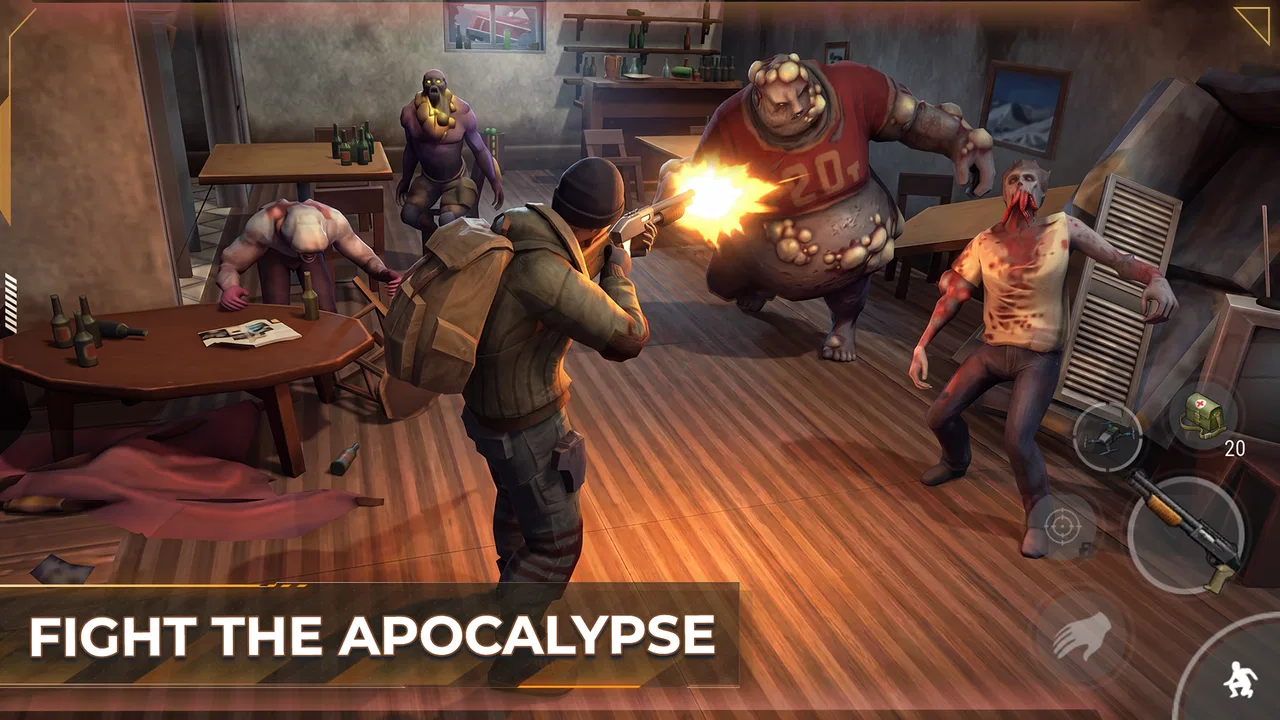
Last Day on Earth: Survival
- 4.4
- Rating
- 100.00M
- Installs
- Free
- Price

 Analysis by App-foxy
What kept me playing Last Day on Earth: Survival was not simply the promise of fighting undead enemies. The more interesting idea is the way survival turns every trip outside your shelter into a decision about risk, preparation, and what you are willing to leave behind. It is an action game from KEFIR, but its strongest identity comes from the survival loop: gather what you can, make useful equipment, return alive, and slowly turn a fragile starting point into a place that supports more ambitious runs.
I approached it as a game to play in short sessions rather than as a story-driven adventure. That distinction matters. The appeal is in managing a growing collection of materials and choosing when to push farther, not in being guided from one dramatic scene to the next. The game is free to start, rated Teen, and has attracted over 100 million installs, so it is clearly aimed at a broad mobile audience. My experience is that it rewards patience more than reflexes alone, although the action becomes much more demanding when supplies are low.
Why the shelter is the real capability
The central capability I found most valuable is the shelter-building and preparation system. It changes the meaning of almost every action. A piece of wood is not just something collected from the environment; it can become part of a safer base, a tool, or a reason to make another trip. Weapons are not merely rewards for winning fights either. They are resources that have to be used thoughtfully because losing equipment can make the next outing harder.
You May Also Like

 Blood Strike: 2.5 Anniversary
Blood Strike’s Loadouts Turn Every Drop Into a Tactical Gamble
A close look at Blood Strike’s custom loadouts: how fast access to signature weapons reshapes its battle royale rhythm, rewards preparation, and narrows the gap between fights.

 Pandora - Music & Podcasts
Pandora’s Music Is Easy to Start, but Harder to Recover
Pandora’s strength is its low-effort path from a seed to a station. Its weak spot is how much confidence it asks you to place in connection, setup, and quiet recovery.

 8 Ball Pool
 Is Built on Rivalries, Rematches, and Routine
A close look at the rivalries, rematches, shared routines, and unanswered safety questions that turn a quick pool match into a persistent mobile community.

 Samsung Music
’s Quiet Strength Is Playing What You Already Own
Its reach comes less from spectacle than from dependable access to a personal library. That simplicity is both the app’s strongest retention engine and its ceiling.

 AccuWeather: Weather Radar
AccuWeather Review: A Quick, Clear Forecast for Everyday Decisions
For everyday plans, the best forecast is the one you can understand quickly. AccuWeather makes rain timing, radar, and local conditions easy to act on, with a few trade-offs.

 Hill Climb Racing
Why Hill Climb Racing Still Turns Crashes Into One More Run
A tiny car, a bumpy hill and one more upgrade: Hill Climb Racing keeps resurfacing because its simple chaos makes every near-miss feel personal.
More From Our News Desk



This gives the game a satisfying chain of consequences. A successful expedition improves the shelter, and a better shelter makes future expeditions more practical. The loop sounds simple, but it creates a constant question: should I spend materials now for immediate protection, or save them for a more useful upgrade later? I enjoyed that tension more than the basic combat itself.
The undead encounters provide the pressure that makes preparation meaningful. If enemies were only obstacles, I could rush through areas without thinking. Instead, the possibility of damage, wasted equipment, or an unsuccessful trip makes me consider my inventory before leaving. The best decisions usually happen before combat begins, when I decide what to carry and what I can afford to lose.
This is also why the game feels different from a straightforward mobile action title. In a typical action game, collecting items often means gathering points before the next fight. Here, collection is tied to survival planning. A seemingly ordinary material can become the missing part of a crafting chain, so careless spending can delay progress. I learned to avoid treating the inventory as a bottomless storage box and instead think of it as a limited set of future options.
The developer, KEFIR, has built the experience around that repeated cycle rather than around one short campaign. It is a good fit for players who like watching a rough base become more capable over time. It is less suitable if you want a quick sequence of levels with a clear finish, because progress depends heavily on repeated gathering and returning to familiar activities.
What preparation feels like during ordinary play
In practice, I usually begin a session by checking what I need rather than immediately heading into danger. That small pause is important. I look at the equipment available, consider which materials are worth collecting, and decide whether the next trip is about gathering, fighting, or simply recovering from an earlier mistake. This turns a short mobile session into a compact planning exercise.
The action controls are easier to understand when I treat combat as part of the expedition rather than the whole purpose of it. Moving carelessly into several threats can consume equipment that would have been useful later. When I slow down and choose encounters more carefully, the same outing becomes much more efficient. The game does not need elaborate tactics to be engaging; it gets mileage from making each mistake affect the next decision.
One useful habit is to separate “must bring” items from “nice to have” items. I prefer leaving room for materials that might appear during a run instead of filling every slot with backup gear. That choice can feel uncomfortable, especially before entering a dangerous area, but it makes successful trips more valuable. It also prevents a common frustration: reaching a useful location and discovering that there is no space to take anything home.
Another practical lesson is to avoid spending the strongest equipment on routine encounters. Saving better supplies for situations that genuinely justify them makes the shelter’s progress steadier. This is not about refusing to use good gear; it is about matching the equipment to the risk. A cheap solution may be enough for a predictable threat, while a more demanding area can justify something better.
That kind of discipline is where the game’s survival character becomes clear. I am not only asking whether I can defeat an enemy. I am asking whether the reward justifies the cost, whether I have enough room to carry it, and whether returning safely will help more than taking one additional risk. Those questions give ordinary resource gathering more personality than it would have in a simple collection game.
A realistic short-session routine
Imagine having a few minutes during a commute or after dinner. I would not start by attempting the most dangerous activity available. I would use the time to organize the shelter, craft a modest amount of equipment, and make a focused trip for one or two materials. If the inventory begins to fill, I would return rather than gamble the entire run for one extra item.
That routine works because the game gives small sessions a clear purpose. A short outing can still improve the next one, even if it does not produce a dramatic victory. I like that sense of continuity, but it comes with a warning: the game can make “one more trip” feel tempting. If I play when I am tired or impatient, I am more likely to take a poor risk and undo some of the progress made earlier.
For a longer session, I would prepare several goals in advance. One trip might focus on materials, another on equipment, and another on testing a more dangerous location. Keeping those aims separate makes it easier to judge whether the session was successful. Otherwise, it is easy to wander between objectives and return with a messy inventory but no meaningful improvement.
The shelter also works as a mental checkpoint. When I return safely, I can convert the result of the expedition into something lasting. That conversion is the most satisfying part of the game for me. It means the time spent gathering has a visible consequence instead of disappearing into a score counter.
Where the survival loop works best
The strongest scenario is for someone who enjoys gradual progress and has patience for repeated preparation. If you like games where a small improvement changes how the next attempt feels, this one has a lot to offer. The first successful return with useful materials can make the next outing more confident, and that confidence encourages you to test a slightly greater risk.
I also think it works well for players who enjoy inventory decisions. The game constantly asks you to value space, equipment, and materials. That makes it more thoughtful than its action label might suggest. The undead are the visible threat, but poor planning is often the more expensive enemy.
It is particularly enjoyable when played as a personal routine. I might spend one session strengthening the shelter, then use the next to gather what the upgrade requires. That rhythm makes progress feel earned. The game is not at its best when I try to rush through it as if it were a conventional level-based action game.
Players who prefer immediate rewards may find the pacing less comfortable. Some actions are valuable because they prepare future progress, not because they create an instant spectacle. The satisfaction arrives when a later trip becomes possible because of earlier work. If that delayed payoff sounds boring, the survival loop may feel more like maintenance than adventure.
What makes it different from familiar alternatives
Compared with a conventional zombie action game, this title places more weight on what happens between fights. A pure combat alternative may offer faster thrills and simpler progression, but it usually does not make the condition of your shelter and the contents of your inventory feel so important. Here, the action has consequences that continue after the encounter ends.
Compared with a relaxed building game, it is much less forgiving. The shelter is not only a creative project; it supports survival. Leaving it means accepting risk, and returning with useful materials feels more meaningful because the outside world can punish careless choices. If you want decoration without pressure, a calmer builder would probably be a better match.
It also differs from a traditional role-playing game with a fixed storyline. I did not play it for a carefully paced narrative or a sequence of major plot revelations. The personal story is the one I create through preparation, mistakes, and gradual improvement. That emergent structure can be compelling, but anyone looking for a strong cinematic campaign should choose a different kind of game.
The comparison with other survival games is more nuanced. Many survival titles offer crafting, gathering, and danger, but this one is shaped for mobile sessions. Its compact decision cycle makes it easy to return to, while the same repetition can become tiring if I am not in the mood to manage resources. The convenience is real, but it does not remove the genre’s usual demand for patience.
The friction I would want new players to understand
The biggest limitation is repetition. Gathering materials, preparing equipment, visiting locations, and returning to the shelter form the backbone of the experience. That loop is satisfying when I am invested in improvement, but it can feel slow when I want constant novelty. The game asks me to accept that some progress will come from doing familiar tasks more efficiently.
There is also a real emotional cost to losing a well-prepared outing. When equipment and collected materials are tied to a risky trip, a mistake can feel more serious than losing a temporary score. I appreciate that tension, but I would not recommend playing while looking for a stress-free distraction. The game can be relaxing when planning goes well and surprisingly irritating when impatience causes a preventable setback.
The free-to-play structure deserves attention as well. The game is free, with in-app purchases ranging from $0.49 to $199.99 per item. I would approach those purchases carefully and decide in advance whether I am comfortable spending anything. The survival loop is most rewarding when I solve problems through preparation, so paying to remove every obstacle could weaken the very tension that makes the game interesting.
That does not mean every player will experience the same level of pressure. Some people are happy to spend for convenience, while others prefer treating the game as a no-cost long-term project. My advice is to enjoy the early loop first and judge whether the normal pace suits you before considering optional spending. If you dislike waiting, repetition, or resource management, purchases will not change the basic personality of the game.
The Teen rating is another useful signal for deciding whether it belongs on a shared device. The setting and undead combat give it a darker tone than a casual cartoon builder. I would not choose it for a young child simply because it is available on a phone. The rating matches the survival atmosphere and should be taken seriously when choosing games for someone else.
Small habits that improve the experience
My first recommendation is to make every expedition answer one clear question. “Can I gather enough of this material?” is better than leaving with a vague hope of finding everything. A focused trip reduces inventory clutter and makes it easier to decide when to return. This habit also exposes which materials are actually slowing down progress.
Second, treat the return journey as part of the mission. Reaching a location with a full inventory is not the end of success; getting home with the useful items is. I became more consistent when I stopped viewing the final stretch as an opportunity for one last unnecessary fight. A safe return often contributes more to long-term progress than a small additional reward.
Third, use the shelter as a planning board rather than only as a place to store things. Before crafting, I consider whether the result supports the next trip or merely fills a short-term gap. This prevents resources from being consumed by equipment that does not match the current goal. It is a simple change, but it makes the whole loop feel more deliberate.
Finally, accept that retreat is a successful decision. Survival games can encourage stubbornness, especially when a player has already invested time in an outing. I found that leaving early is often the smarter move when supplies are running low or the inventory contains something important. The game rewards continuity: a modest safe return can set up a much stronger attempt later.
Who should play it, and who should skip it
I would recommend this action game to players who enjoy crafting, base improvement, and meaningful inventory choices. It suits someone who likes checking progress over several sessions and does not need every minute to deliver a major event. The combination of undead danger and shelter development gives routine gathering a purpose.
It is also a good choice for players who want a game that can be played in short bursts but still has long-term depth. The current version is 1.45.0, and it supports devices running Android 7.0 or later. Those details make it accessible to many Android users, although the more important question is whether the survival rhythm matches your taste.
I would skip it if you want a completely linear adventure, instant access to powerful equipment, or a game that never asks you to repeat a task. I would also look elsewhere if you dislike losing progress through risky decisions or prefer combat without inventory management. A faster arcade action game will provide cleaner, more immediate excitement.
Likewise, players who mainly want creative construction may find the danger distracting rather than motivating. The shelter exists within a survival system, so its value is connected to what it helps you do outside. For me, that connection is the point; for someone seeking a peaceful building sandbox, it may be an unnecessary source of pressure.
My recommendation after living with the loop
With an average rating of 4.4 from around 4.7 million ratings and roughly 177 thousand written reviews, the game has clearly found a large audience. Those numbers do not decide whether it is right for you, but they fit my impression that the core loop is easy to understand and difficult to master. It offers a recognizable premise while giving it enough resource tension to stand apart from a simple zombie shooter.
What I value most is the way the shelter gives meaning to preparation. Every careful trip can make the next one safer, more ambitious, or simply less wasteful. That is a stronger hook than collecting materials for its own sake. At the same time, the repetition and free-to-play choices mean I would not recommend it blindly to everyone.
If you enjoy planning around limited supplies, accept a gradual pace, and like the feeling of turning small successful outings into lasting progress, I think it is worth trying. Start slowly, keep your goals focused, and do not confuse a dangerous opportunity with a necessary one. Last Day on Earth: Survival is at its best when survival feels like a decision you made, not just a fight you won.
FAQs for Last Day on Earth: Survival
01What is Last Day on Earth: Survival about?
Last Day on Earth: Survival is an action-packed survival game set in a post-apocalyptic world where players must gather resources, build bases, and fend off zombies and other threats. The game challenges players to survive by managing health, hunger, and thirst, while exploring a vast open world filled with dangers and opportunities.
02Is Last Day on Earth: Survival free to play?
Yes, Last Day on Earth: Survival is free to download and play. However, it offers in-app purchases for players who wish to enhance their gaming experience. These purchases can include resources, weapons, and other items that can aid in survival, but they are not necessary to enjoy the game fully.
03Can I play Last Day on Earth: Survival offline?
No, Last Day on Earth: Survival requires an internet connection to play. This is because the game includes online features such as player interaction and updates that need a stable connection. It's important to ensure you have a reliable network to enjoy uninterrupted gameplay.
04What devices are compatible with Last Day on Earth: Survival?
Last Day on Earth: Survival is available on both Android and iOS platforms. For Android, it typically requires version 5.0 and up, while iOS devices need version 9.0 or later. It's recommended to check the specific device requirements in the app store to ensure compatibility.
05How can I progress faster in Last Day on Earth: Survival?
Progressing in Last Day on Earth: Survival involves strategic planning and resource management. Focus on gathering essential resources, crafting effective tools, and upgrading your base. Participating in events and raids can also yield valuable items. While in-app purchases can expedite progress, skillful gameplay is key to advancing efficiently.
Pros
- Engaging survival gameplay with crafting elements.
- Regular updates keep the game fresh and exciting.
- Extensive open world to explore and conquer.
- Collaborative multiplayer mode enhances experience.
- Challenging events offer rewarding gameplay.
Cons
- Requires consistent internet connection to play.
- In-app purchases can be pricey.
- Resource grinding can become repetitive.
- Energy system limits continuous play.
- Limited inventory space without upgrades.

Last Day on Earth: Survival
Gallery